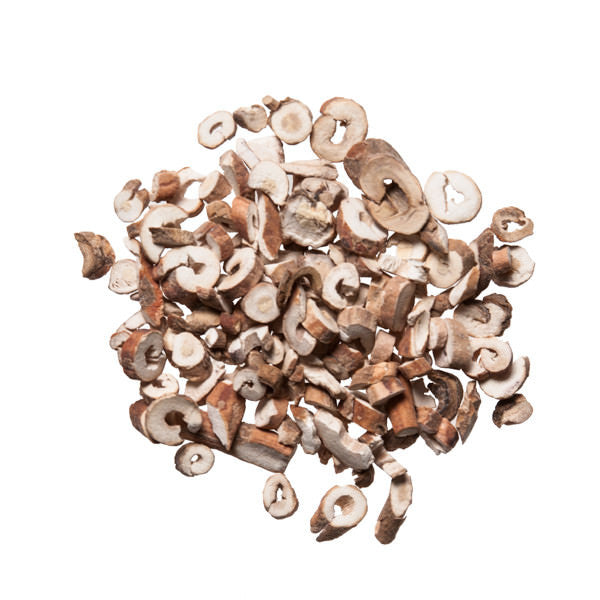
Mu Dan Pi (Tree Peony Root Bark) – Paeonia suffruticosa
Mu Dan Pi (Paeonia suffruticosa), also known as Tree Peony Root Bark or Moutan Cortex, is a traditional herb used in Traditional Chinese Medicine (TCM). For centuries, it has been valued for its ability to clear heat, cool the Blood, and gently invigorate circulation, helping to restore balance when heat and blood-level imbalances arise in the body.
In classical Chinese herbal medicine, Mu Dan Pi is commonly included in formulas designed to clear heat from the Blood level while supporting smooth circulation and balance.
At Plum Dragon Herbs, we offer carefully sourced premium Mu Dan Pi bulk herb selected for quality, potency, and traditional authenticity.
Our herbs are ideal for:
• Herbal practitioners
• Custom herbal formulas
• Decoctions and teas
• Practitioner herb packs
Learn More About This Herb
Want to explore the traditional classification, channels, and historical use of this herb in greater depth?
👉 Mu Dan Pi Herb Guide
Traditional Uses of Mu Dan Pi in Chinese Medicine
In Traditional Chinese Medicine, Mu Dan Pi is classified as a Heat-Clearing and Blood-Cooling Herb.
Traditionally, it is used to:
• Clear heat and cool the Blood
• Support healthy circulation and resolve Blood stasis
• Help regulate patterns associated with heat in the Blood level
• Support balance in the Liver and Heart systems
• Assist in dispersing constrained heat
In classical herbal theory, Mu Dan Pi enters the Heart, Liver, and Kidney channels, where it helps restore balance when heat and stagnation disrupt normal physiological function.
Because of these properties, Mu Dan Pi is widely used in traditional herbal formulas and practitioner herb packs.
Herbs Often Used With Mu Dan Pi
Mu Dan Pi is frequently combined with other herbs in traditional Chinese formulas, including:
• Chi Shao (Red Peony Root)
• Sheng Di Huang (Rehmannia Root)
• Zhi Zi (Gardenia Fruit)
• Tao Ren (Peach Kernel)
These herbs are commonly used together to support balanced herbal formulas.
Modern Research on Paeonia suffruticosa
Modern research has identified important compounds in Paeonia suffruticosa, including paeonol, which has been studied for its antioxidant and anti-inflammatory activity.
Scientific interest in this herb has explored potential roles in supporting:
• Circulatory health
• Skin and tissue balance
• Immune system regulation
• Protection against oxidative stress
While research continues, this herb remains primarily valued within the framework of Traditional Chinese Medicine.
Premium Quality Mu Dan Pi
High-quality Mu Dan Pi should display several identifiable characteristics:
• Thin, curved bark pieces
• Reddish-brown outer surface with lighter inner layer
• Slightly aromatic scent
• Clean, dry texture without mold or excessive fragmentation
At Plum Dragon Herbs, our herbs are carefully selected and properly dried to preserve their traditional qualities.
Origin and Harvesting
Paeonia suffruticosa is cultivated throughout China. The medicinal portion used in Chinese herbal medicine is the root bark (cortex).
Traditionally, the bark is harvested after several years of growth, when the plant has developed sufficient potency. After harvesting:
• Roots are dug and cleaned
• Bark is carefully separated from the root
• Sliced or cut into pieces
• Dried to preserve active compounds
• Fully prepared for herbal use
How Mu Dan Pi is Traditionally Used
Mu Dan Pi may be prepared in several traditional ways.
Herbal Tea
Use 1–2 grams of the herb and steep in hot water for 10–15 minutes.
Decoction
Simmer 3–5 grams in approximately 500 ml of water for 30 minutes.
Herbal Formulas
Mu Dan Pi is widely used in traditional Chinese herbal formulas, often combined with other herbs to balance its cooling and circulatory properties.
Always consult a qualified healthcare practitioner for dosage and individualized guidance.
Safety and Precautions
This herb should be used appropriately according to individual constitution.
Use caution if:
• Pregnant or breastfeeding
• Taking prescription medications
• Experiencing bleeding disorders
• Sensitive to cooling herbs
Consult a qualified healthcare practitioner before using herbal products.
Additional Information
Botanical Name: Paeonia suffruticosa
Common Names: Mu Dan Pi, Tree Peony Root Bark, Moutan Cortex, Mountain Peony Bark
Flavor: Bitter, Acrid
Temperature: Cool
Channels Entered:
• Heart
• Liver
• Kidney
Contraindications:
Use caution in cases of deficiency or during pregnancy.
Why Choose Plum Dragon Herbs?
At Plum Dragon Herbs, we specialize in authentic Chinese medicinal herbs sourced for quality and potency. Our herbs are selected and processed according to traditional standards to support the needs of practitioners, martial artists, herbalists, and enthusiasts alike.
Experience the tradition and quality of authentic Chinese herbs from Plum Dragon Herbs.
Important Disclaimer
The information provided on this page reflects traditional herbal knowledge and historical use within Chinese medicine and is intended for educational purposes only.
Plum Dragon Herbs products are raw botanical materials and are not intended to diagnose, treat, cure, or prevent any disease.
Statements on this website have not been evaluated by the Food and Drug Administration (FDA).
Always consult a qualified healthcare professional before using herbal products, particularly if you are pregnant, nursing, taking medications, or have a medical condition.