Qiang Huo (Notopterygium Root) TCM Herb Guide
Buy Qiang Huo (Notopterygium Root) here →
Qiang Huo (Notopterygium incisum / Notopterygium forbesii), commonly known as Notopterygium Root, is a classic herb in Traditional Chinese Medicine (TCM). For centuries, this respected Qiang Huo herb has been valued for its traditional ability to release the exterior, dispel wind-damp, and support comfort in the upper body and channels.

In classical Chinese medicine, Qiang Huo is frequently included in formulas designed to address wind-cold-damp patterns, support healthy movement, and help maintain balance in the Tai Yang channels. Because of its aromatic and dispersing nature, Qiang Huo in Chinese medicine remains widely used in traditional formulas.
As a well-known wind-damp herb in Chinese herbal theory, Qiang Huo is especially recognized for its traditional association with the upper back, neck, shoulders, and occipital region.
What Is Qiang Huo in Traditional Chinese Medicine?
Qiang Huo refers to the dried root and rhizome of Notopterygium species long used in East Asian herbal traditions. In TCM, it is traditionally categorized among herbs that release the exterior and dispel wind-damp.
This Qiang Huo herb guide explains why the herb is so often discussed in relation to wind-damp patterns, upper body channel support, and traditional movement throughout the Tai Yang pathways.
Qiang Huo Properties: Flavor, Temperature & Channels
Category: Exterior-Releasing Herbs / Wind-Damp Dispelling Herbs
Flavor: Acrid, Bitter
Temperature: Warm
Channels Entered
- Bladder
- Kidney
These traditional Qiang Huo properties help explain why the herb is associated with dispersing, drying, warming, and supporting movement in classical Chinese herbal theory.
Traditional Uses of Qiang Huo in Chinese Medicine
In Traditional Chinese Medicine, Qiang Huo is traditionally used to:
- Release the exterior and expel wind-cold
- Dispel wind-damp
- Support comfort in the upper body and channels
- Promote healthy movement in the Tai Yang pathways
- Warm and disperse cold-damp patterns
Because of these traditional uses, Qiang Huo appears in many classical formulas associated with external wind-cold-damp patterns and discomfort affecting the upper body.
Botanical Information
Botanical Name: Notopterygium incisum, Notopterygium forbesii
Family: Apiaceae
Qiang Huo is derived from the dried root and rhizome of perennial plants native to high-altitude regions of China. The underground portions are harvested, cleaned, sliced, and dried for traditional herbal use.
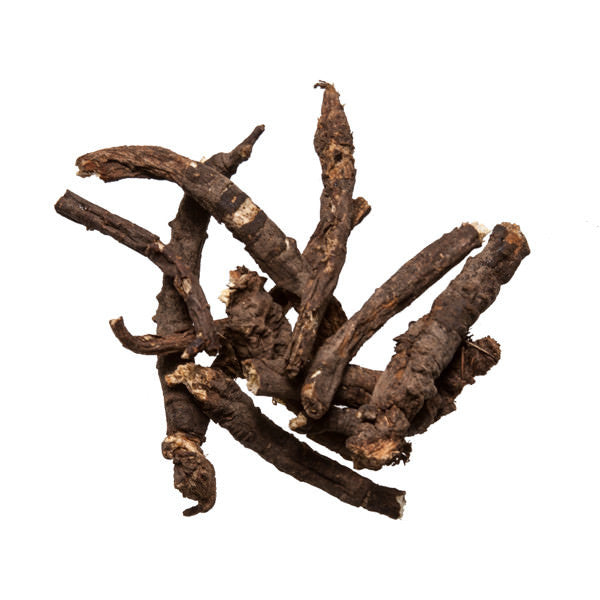
The finished herb is aromatic, fibrous, and dense, reflecting the plant material historically valued in Chinese herbal medicine.
Notopterygium Root has remained an important herb in traditional East Asian materia medica for centuries.
Historical Use of Qiang Huo Herb
Qiang Huo has been recorded in Chinese medical literature for many centuries and is considered one of the classic herbs for dispelling wind-damp from the upper body.
Historically, it has been valued for its versatility in formulas intended for exterior wind-cold patterns, damp obstruction, and support for the neck, shoulders, upper back, and occipital region according to traditional Chinese herbal theory.
Herbs Often Used With Qiang Huo
Qiang Huo is frequently combined with herbs that release the exterior, dispel wind-damp, support circulation, or strengthen the body’s defenses in traditional formulas.
Common companion herbs include:
- Fang Feng (Siler Root) Herb – traditionally used to expel wind and support the exterior
- Du Huo (Angelica Pubescens Root) Herb – traditionally used to dispel wind-damp and support the lower body
- Chuan Xiong (Ligusticum Rhizome) Herb – traditionally used to promote circulation and support movement
- Gan Cao (Licorice Root) Herb – traditionally used to harmonize formulas and moderate intensity
These herbs are often paired with Qiang Huo to create balanced formulas that disperse wind-damp, support movement, and maintain harmony within broader traditional herbal strategies.
Qiang Huo in Traditional Herbal Formulas
In Traditional Chinese Medicine, Qiang Huo is rarely used alone and is instead included in multi-herb formulas.
It plays an important role in formulas designed to:
- Release external wind-cold patterns
- Dispel wind-damp obstruction
- Support the upper body and Tai Yang channels
- Promote healthy movement and circulation
- Warm cold-damp patterns in traditional theory
This makes Qiang Huo especially valuable for practitioners creating custom herbal formulas focused on wind-damp patterns, upper body support, and movement.
FAQ About Qiang Huo
What is Qiang Huo used for in TCM?
Qiang Huo is traditionally used in Chinese medicine to release the exterior, dispel wind-damp, support the upper body, and promote movement in the channels.
Is Qiang Huo the same as Notopterygium Root?
Yes. Qiang Huo is the traditional Chinese herbal name for Notopterygium Root, typically sourced from Notopterygium incisum or Notopterygium forbesii.
What are the traditional properties of Qiang Huo?
Qiang Huo is traditionally classified as acrid, bitter, and warm, and is associated with the Bladder and Kidney channels.
Important Disclaimer
The information provided on this page reflects traditional herbal knowledge and historical use within Chinese medicine and is intended for educational purposes only.
Plum Dragon Herbs products are raw botanical materials and are not intended to diagnose, treat, cure, or prevent any disease.
Statements on this website have not been evaluated by the Food and Drug Administration (FDA).
Always consult a qualified healthcare professional before using herbal products, particularly if you are pregnant, nursing, taking medications, or have a medical condition.
Featured collection
Featured products


Mei Gui Hua (Rugose Rose)

Bo He (Zhi) (Wild Mint Leaf) (制薄荷)